From Institutional to Intimate: The Shift Towards Little Senior Memory Care Homes
Business Name: BeeHive Homes of Maple Grove
Address: 14901 Weaver Lake Rd, Maple Grove, MN 55311
Phone: (763) 310-8111
BeeHive Homes of Maple Grove
BeeHive Homes at Maple Grove is not a facility, it is a HOME where friends and family are welcome anytime! We are locally owned and operated, with a leadership team that has been serving older adults for over two decades. Our mission is to provide individualized care and attention to each of the seniors for whom we are entrusted to care. What sets us apart: care team members selected based on their passion to promote wellness, choice and safety; our dedication to know each resident on a personal level; specialized design that caters to people living with dementia. Caring for those with memory loss is ALL we do.
14901 Weaver Lake Rd, Maple Grove, MN 55311
Business Hours
Families often explain the look for dementia care as the hardest series of decisions they have ever made. You are juggling security, expense, regret, and love, while attempting to translate medical lingo, licensing rules, and shiny pamphlets. For years, the default answer was a large assisted living or nursing facility with a locked memory care wing. Recently, more families are stepping away from that design and towards something quieter: small, home-like senior care settings focused totally on memory care.
These are sometimes called residential care homes, care cottages, or small senior memory care homes. Labels vary by state, however the core concept is consistent. Instead of 60 to 120 citizens in a huge building, you might have 6 to 16 people residing in a real house on a residential street, with experienced caretakers on site around the clock.
The shift towards these intimate settings is not simply a pattern. It shows deep discontentment with institutional designs and a better understanding of what individuals with dementia really need to feel secure and valued.
How the "big structure" model took over
Large assisted living communities did not grow by accident. They fit the financial and regulative structure that controlled senior take care of years. The design was basic: many houses or rooms organized around shared dining and activity locations, with different levels for independent living, assisted living, and memory care. Provider like medication management, bathing help, and housekeeping were layered on top.
From an operator's point of view, this structure scales well. One nurse can supervise many homeowners, one activities director can prepare occasions for a whole flooring, and a central cooking area can prepare hundreds of meals daily. Investors understand the model and know how to forecast occupancy, staffing ratios, and revenue.
For households, the benefits can appear obvious at first look. There is a long menu of services, social programs, therapy offerings, and onsite additionals such as beauty salons or transportation. The structures typically appear like high end hotels. When you are feeling guilty about moving a parent from home to "a center," it is appealing to relate more amenities with better care.
The issues appear later on, when the complexities of dementia start to encounter the realities of massive operations. Personnel turnover, long walks from spaces to dining, overstimulating environments, and stiff schedules can be tiring for somebody whose brain can no longer filter sound, navigate area, or remember what they are "expected" to do next.
Families tell you that a parent who was mild in the house suddenly began "acting out" after the relocation. Frequently, absolutely nothing changed clinically. The environment altered, and the brain responded with distress.
Why dementia and institutional settings typically collide
Dementia is not only about memory. It impacts understanding of space, capability to interpret faces and expressions, stress tolerance, and day-night rhythms. The features that help a hotel run smoothly can work directly versus somebody with cognitive decline.
A couple of patterns turn up repeatedly in big, traditional senior care:
Staffing feels stretched. A caretaker may be responsible for 12, 15, or more homeowners throughout a hectic shift. Even with the very best intents, that structure pushes care towards task conclusion rather than relationship building. Showers end up being something to survive, not a moment to protect dignity.
Noise and motion never really stop. Elevators, Televisions, overhead statements, vacuum cleaners, and large-group activities develop continuous background stimulation. Individuals with dementia frequently lose the capability to filter this, which causes anxiety or withdrawal.
Distance becomes a day-to-day obstacle. Long corridors, elevators, and large dining-room include several points where a resident can forget their destination, get reversed, or lose track of hints. Each misstep reinforces their sense of failure.
Schedules are developed around the system. Breakfast at 8, lunch at 12, medications at set times, group activities at 2. That consistency assists staffing and logistics, however the brain with dementia may not sync with the clock. Getting up late, refusing to go to the dining-room, or roaming throughout "rest time" gets identified as habits, instead of a mismatch.
One child summed it up to me merely: "The community was great. My mom simply could not live that kind of life anymore."
Small senior memory care homes emerged specifically to address this gap.
What defines a small senior memory care home
Where a large community might look like a cruise liner, a properly designed small memory care home seems like going to a relative who occurs to have expert caretakers and safety features developed in.
A typical home might have 6 to 10 homeowners, each with a private or semi-private bed room, a big shared living room, an open kitchen, and a yard or patio. Some homes are transformed single-family homes; others are purpose-built but still scaled to residential proportions.
Several operational distinctions matter more than the building:
Caregivers know each resident extremely well. When you only support a handful of people, you see how they like their coffee, which song soothes them during a bath, and the early indications of a urinary system infection. That level of familiarity is tough to duplicate in a location with several systems and continuous staff rotation.
The day follows individuals, not the other way around. If someone wakes at 5 a.m. Hungry for toast, a caretaker can securely accommodate that. If another resident chooses a late breakfast and a quiet walk before joining others, the environment can bend. There is frequently a loose structure, but it flexes to private rhythms.
Spaces are scaled to the brain. Rooms are more detailed together. Bathrooms sit a couple of actions from bed rooms. The kitchen shows up, so smells of cooking serve as cues for mealtimes. This minimizes disorientation and the aggravation of "I know there was a bathroom somewhere."
Family life is much easier to keep. Grandchildren can visit and sit at the kitchen area table for a treat. Conversations feel more natural without screaming over a dining hall. Numerous households report that holiday visits in a little home feel more like "going to Granny's house," which softens the psychological weight of senior care.
When little memory care homes are succeeded, the intimacy is not just aesthetic. It forms how assisted living, dementia care, and even respite care are delivered day to day.
The heart of the shift: relationship-based care
The most effective change in small homes is cultural, not architectural. Staffing patterns and training are developed around relationships rather of jobs. This method is in some cases called person-centered care, but that phrase is so worn-out that it risks becoming background noise. The difference shows in where time and attention go.
In a conventional schedule, a caregiver might have 10 minutes slotted for each resident's morning routine. If somebody withstands a shower or feels confused, the pressure to proceed boosts. In a little home, a caretaker has fewer people to support, so they can sit on the edge of the bed, talk, sing, or simply hold a hand until the anxiety passes. The shower still happens, however at a rate the brain can handle.
I as soon as viewed a caretaker in a six-bed home help a gentleman with innovative dementia get dressed. The process took nearly 40 minutes. They chatted about his days dealing with a farm, and she laid clothing out in the very same order each day so he might still participate by selecting a t-shirt. In a large neighborhood, that kind of time merely is not readily available regularly. The result was not simply tidy clothing, however preserved identity.
This relational depth likewise enhances clinical outcomes. Subtle modifications in gait, hunger, state of mind, or sleep typically precede falls, infections, or medication reactions. When personnel see the same 6 to 8 faces every day, these shifts stick out. Early intervention is much easier. In practice, that can suggest less emergency clinic visits and less disruptive healthcare facility stays.
Assisted living, memory care, and where small homes fit
Families often get tangled in terms. Assisted living, memory care, dementia care, competent nursing, board and care - it starts to blur together. Small senior memory care homes generally sit at the crossway of assisted living and specialized memory support.
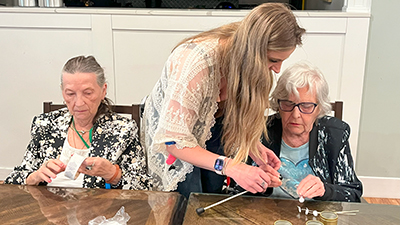
Residents normally need aid with some or most activities of daily living. These consist of bathing, dressing, medications, toileting, transfers, and meals. What differentiates a true memory care home is not just that the locals have detected cognitive disability, however that every aspect of the environment is tuned for dementia.
You will often see:
- Higher staff-to-resident ratios than normal assisted living
- Secured outside spaces that avoid risky wandering while allowing fresh air
- Simplified visual cues, such as contrasting colors for toilet seats or plates
- Structured however versatile routines that anchor the day without frustrating
In states where regulation enables, some small homes support relatively sophisticated medical needs with nurse oversight. In other areas, they need to discharge citizens who require specific levels of proficient nursing. Understanding regional rules is important, due to the fact that it directly affects whether a particular home can provide care through the later stages of dementia.
For households, the useful concern is typically: "Can my parent age in place here, or will we have to move once again?" A mindful, sincere assessment up front matters more than any marketing phrase.
Respite care in a little home: a different type of break
Respite care is frequently framed as a short-term service for caregivers who are "burned out." That framing misses out on the point. Planned breaks are a core element of sustainable senior care in the house, especially when dementia is involved.
Large communities typically offer respite stays of a couple of days to a couple of weeks in furnished apartments. These can be valuable, however the modification period is real. New structure, brand-new routines, brand-new faces. By the time an individual with dementia begins to feel settled, it is many times to go home again.
In a little senior memory care home, respite can feel much less disruptive:
The setting appears like what the brain anticipates. A home, a backyard, a kitchen, a living room. Even if the design is unknown, the total pattern matches years of memory. This can decrease confusion and nighttime agitation.
Staff quickly learn preferences. Over a two-week respite stay, caretakers will probably see and react to repeating patterns: how someone likes their tea, whether they speed before meals, which chair they pick. With a handful of homeowners, these information land faster.
Interaction feels more organic. Instead of walking into a large dining room loaded with complete strangers, a respite resident joins a table with five or 6 others. Conversation is simpler. Silence is comfortable. There is space for slowness.
Used strategically, respite remain in a small home can likewise serve as a mild trial run for future full-time placement. Both the family and the personnel discover whether the fit is right without the psychological weight of a long-term move.
The trade-offs: little is not always immediately better
Every care model has limits. It is appealing to romanticize little homes as widely exceptional, however that does an injustice to households making tough trade-offs.
Cost structure can cut both ways. Some small homes are more affordable than large communities, particularly in regions where property and overhead are lower. Others sit at the premium end of the market. Pricing varies widely, and additions matter: are incontinence products consisted of, or billed individually, for example.
Access to onsite medical services is frequently more minimal. A large assisted living with memory care might have regular visits from physiotherapists, nurse professionals, or drug store consulting teams. In a little home, these services typically come in from the outside on an as-needed basis. That works well with a strong medical care medical professional and coordinated home health, but it requires more proactive communication.
Social alternatives differ. Some homeowners really take pleasure in large-group activities, outings, or the buzz of a larger setting. A previous teacher might thrive running a trivia game in a 40-person hall. In a six-bed home, social life is more intimate by design, which suits some personalities much better than others.
Regulation and quality can be irregular. A gorgeous website indicates little if staffing is unsteady or the owner views the home primarily as a realty financial investment. With little operations, the range between outstanding and poor is large. Families require to look past décor and into day-to-day routines, personnel training, and turnover.
Geography matters. Not every neighborhood has well-run little senior memory care homes. Backwoods might have less certified choices, or homes that choose to specialize more in basic senior care than dementia care. In those cases, a respectable larger memory care program may be the safer choice.
The question is not "small or big" in the abstract. It is, "Offered my parent's requirements, personality, resources, and place, which particular setting lines up finest with how they wish to live?"
What to search for when you tour a small memory care home
Even experienced health care specialists can be amazed by how various 2 memory care homes feel, even when they look similar on paper. Licenses, staff ratios, and square footage do not inform the entire story. You find out a lot from what you see and feel while standing in the living room.
Here is a concentrated list families frequently find beneficial when examining little homes:
- Engagement: Are homeowners up, dressed, and involved in something recognizable as real life, not simply parked in front of a tv?
- Staff presence: Do caregivers stay primarily in the typical locations, connecting, or are they hidden in a back workplace?
- Communication: When you ask comprehensive concerns about care, medications, or emergencies, do you get specific responses or vague reassurance?
- Environment: Exist clear visual hints for bathrooms, exits, and dining, with minimal mess and safe outside access?
- Family gain access to: How does the home manage checking out, shared meals, and participation in care preparation?
It is worth visiting 2 or 3 memory care maple grove mn times, if possible, at various times of day. Early morning exposes how the home handles wake-up routines, which can be the hardest part of dementia care. Late afternoon or early night demonstrates how they manage "sundowning," the agitation that often surfaces as daytime fades.
Ask to see where medications are saved, how they log administration, and who is licensed to give them. Discover how frequently a nurse visits and what activates a call to the physician or paramedics. A solid home will stroll you through specific situations they handle regularly: a fall, refusal of care, a family disagreement about goals of care.
Integrating small homes into a wider care journey
Senior care choices rarely happen in a straight line. A typical path might begin with family-provided support at home, supplemented by adult day programs or at home assistants. Over time, security concerns grow, and households look towards assisted living or specialized dementia care.
Small memory care homes can play various roles along this course:
Short-term respite when household caretakers require surgery, travel, or just deep rest.
A bridge setting for someone who can no longer live safely alone but does not yet require complete nursing home care.A long-term home for the rest of the dementia journey, especially when the home is geared up to handle late-stage requirements in collaboration with hospice.
The key is to see these homes not as separated islands, however as part of a network that consists of medical care, neurologists, health center teams, home health, and hospice. The best outcomes come when details flows efficiently among all parties.
If your parent moves into a small senior memory care home, share medical records, advance regulations, and medication lists in a structured way. Establish how the home will interact changes to you and to the medical group. Ask about their experience partnering with hospice, even if you are not at that point yet. Clarity early on avoids confusion during crises.
Emotional effect on families
Beyond medical procedures, among the starkest distinctions I have seen between institutional settings and intimate homes is emotional. Households of residents in little homes frequently report a different type of sorrow. The loss is still real and heavy, but the everyday experience feels less like "checking out a center" and more like getting in a shared household.
Adult kids are more likely to sit at the kitchen area counter, help serve lunch, or join a walk in the yard. Conversations with personnel seem like exchanges between partners, instead of demands to a distant service provider. This sense of shared ownership over care decisions can reduce regret and helplessness.
One son told me, "It still hurts whenever I leave, however I do not go home feeling like I abandoned my dad. I seem like I left him with people who actually understand him." That distinction, while difficult to measure, matters deeply.
At the same time, the intimacy of small homes can cut both ways emotionally. When bonds with personnel and other citizens are strong, deaths in the home impact everyone. You are not protected by layers of administration. Families must be gotten ready for that depth of connection, which carries both convenience and vulnerability.
Looking ahead: the future of little memory care homes
Demographics ensure that demand for dementia care will keep rising over the coming years. Big assisted living neighborhoods will remain part of the landscape, and lots of will improve their memory care wings with much better training and ecological design.
Small senior memory care homes will likely expand in parallel, specifically in regions where states acknowledge and appropriately regulate residential designs. Their success will depend on preserving quality as numbers grow. A six-bed crowning achievement by a deeply included owner is one thing; a portfolio of dozens of such homes spread out throughout numerous counties is another, and requires more official systems.
For families and specialists, the most crucial frame of mind shift is to move far from thinking of senior care solely in institutional terms. Home is not just a place; it is a lifestyle, relating, and being acknowledged. For many people with dementia, a little, intimate memory care home uses the closest approximation of that feeling, while still offering the security and support they now need.
Choosing care for a loved one with dementia will never be simple. But understanding the genuine distinctions between institutional and intimate alternatives, and how each lines up with your parent's history, personality, and medical needs, brings the choice out of the fog and into clearer light.
BeeHive Homes of Maple Grove provides assisted living care
BeeHive Homes of Maple Grove provides memory care services
BeeHive Homes of Maple Grove is a memory care home for seniors
BeeHive Homes of Maple Grove provides respite care services
BeeHive Homes of Maple Grove offers 24-hour support from professional caregivers
BeeHive Homes of Maple Grove offers private bedrooms with private bathrooms
BeeHive Homes of Maple Grove provides medication monitoring and documentation
BeeHive Homes of Maple Grove serves dietitian-approved meals
BeeHive Homes of Maple Grove provides housekeeping services
BeeHive Homes of Maple Grove provides laundry services
BeeHive Homes of Maple Grove offers community dining and social engagement activities
BeeHive Homes of Maple Grove features life enrichment activities
BeeHive Homes of Maple Grove supports personal care assistance during meals and daily routines
BeeHive Homes of Maple Grove promotes frequent physical and mental exercise opportunities
BeeHive Homes of Maple Grove provides a home-like residential environment
BeeHive Homes of Maple Grove creates customized care plans as residents’ needs change
BeeHive Homes of Maple Grove assesses individual resident care needs
BeeHive Homes of Maple Grove accepts private pay and long-term care insurance
BeeHive Homes of Maple Grove assists qualified veterans with Aid and Attendance benefits
BeeHive Homes of Maple Grove encourages meaningful resident-to-staff relationships
BeeHive Homes of Maple Grove delivers compassionate, attentive senior care focused on dignity and comfort
BeeHive Homes of Maple Grove has a phone number of (763) 310-8111
BeeHive Homes of Maple Grove has an address of 14901 Weaver Lake Rd, Maple Grove, MN 55311
BeeHive Homes of Maple Grove has a website https://beehivehomes.com/locations/maple-grove/
BeeHive Homes of Maple Grove has Google Maps listing https://maps.app.goo.gl/n99VhHgdH879gqTH8
BeeHive Homes of Maple Grove has Facebook page https://www.facebook.com/BeeHiveMapleGrove
BeeHive Homes of Maple Grove won Top Memory Care Homes 2025
BeeHive Homes of Maple Grove earned Best Customer Service Award 2024
BeeHive Homes of Maple Grove placed 1st for Senior Living Memory Care Communities 2025
People Also Ask about BeeHive Homes of Maple Grove
What is the monthly room rate at BeeHive Homes of Maple Grove?
The monthly rate depends on each resident’s care needs, room selection, and personalized care plan. Before move-in, we complete an initial assessment to better understand your loved one’s health, safety, mobility, personal care, and memory care needs. From there, we provide clear pricing based on the level of support required. Our goal is to keep families informed with transparent pricing and no hidden fees.
Does BeeHive Homes of Maple Grove only offer Memory Care?
BeeHive Homes of Maple Grove offers enhanced assisted living with specialized memory care support. We are experienced in caring for seniors living with Alzheimer’s, dementia, and other forms of memory loss, while also welcoming residents who may not have a dementia diagnosis but would benefit from a secure, highly personalized care environment. Our homelike setting is especially helpful for seniors who are earlier in their dementia journey, as well as those who need extra structure, daily support, meaningful routines, and compassionate oversight. Each resident receives care tailored to their needs, helping them feel safe, supported, and truly at home.
Can residents stay at BeeHive Homes through the end of life?
In many cases, yes. Our goal is to help residents remain in a familiar, comforting environment for as long as we can safely meet their needs. There may be exceptions if a resident requires 24-hour skilled nursing services or has needs that cannot be safely supported in our memory care setting. When care needs change, our team works closely with families, physicians, hospice providers, and other care professionals to help make the next step as smooth and compassionate as possible.
Do you have nurses on staff?
Yes. BeeHive Homes of Maple Grove has a team of Registered Nurses who provide care oversight, assessments, care planning, and coordination with other healthcare professionals. The typical RN schedule is Monday through Friday from 7:00 AM to 6:00 PM and weekends from 9:00 AM to 5:30 PM, with a Registered Nurse on call after hours. This helps families feel confident that their loved one’s changing memory care needs are being monitored with attention and compassion.
What are the visiting hours at BeeHive Homes of Maple Grove?
Family and friends are welcome to visit anytime. Because routine is especially important for residents with memory loss, we encourage visitors to avoid scheduled meal times when possible: 8:00 AM, 11:30 AM, and 4:30 PM. Visits are an important part of helping residents feel connected, loved, and at home.
Are the rooms private?
Yes. Residents enjoy private memory care suites with fully accessible bathrooms. Families are encouraged to personalize the room with familiar furniture, photos, keepsakes, and comforting touches that help the space feel like their loved one’s own. BeeHive Homes of Maple Grove also offers accommodations for couples who wish to remain together, depending on availability./p>
How do I schedule a tour or learn more?
You can call BeeHive Homes of Maple Grove at 763-310-8111 to ask questions, discuss availability, or schedule a personal tour. Visiting in person is one of the best ways to experience the warmth of the home, meet the care team, and see whether BeeHive Homes is the right fit for your loved one.
What makes BeeHive Homes of Maple Grove different from larger memory care communities?
BeeHive Homes of Maple Grove offers memory care in a smaller, more personal residential setting. Residents are known by name, supported according to their individual routines, and cared for in a warm environment that feels like home. From private suites and home-cooked meals to life enrichment activities and secure spaces, our approach is centered on comfort, dignity, and meaningful connection.
Where is BeeHive Homes of Maple Grove located?
BeeHive Homes of Maple Grove is conveniently located at 14901 Weaver Lake Rd, Maple Grove, MN 55311. You can easily find directions on Google Maps or call at (763) 310-8111 Monday through Sunday 7am to 7pm.
How can I contact BeeHive Homes of Maple Grove?
You can contact BeeHive Homes of Maple Grove by phone at: (763) 310-8111, visit their website at https://beehivehomes.com/locations/maple-grove, or connect on social media via Facebook
You might take a short drive to CRAVE Food & Drink Maple Grove. Crave American Kitchen & Sushi Bar offers diverse menu options that accommodate assisted living and elderly care needs during memory care and respite care dining visits.